
Villainy as a Form of Self-Care
Villain
DISPATCHES FROM PURGATORY
Valkyrie
10/22/20253 min read
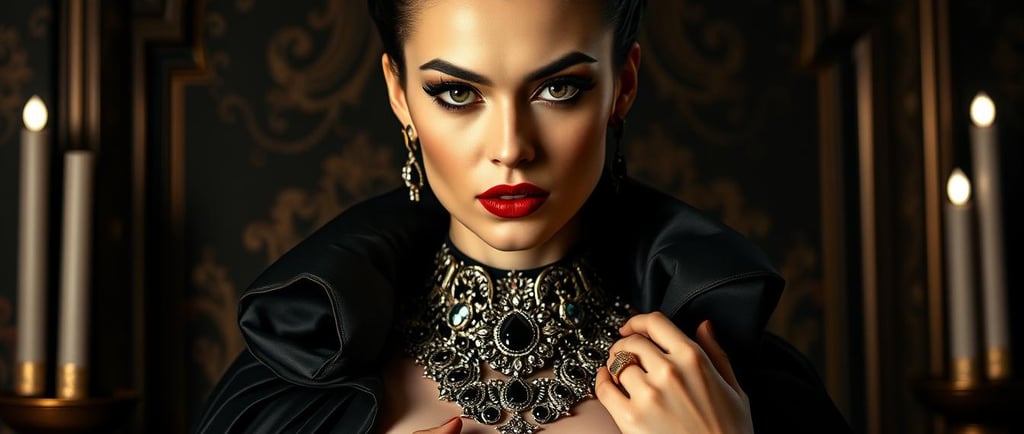
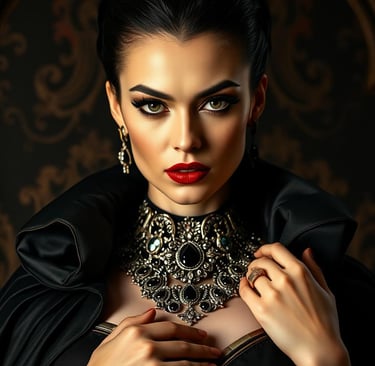
To embrace the shadow is not to fall into ruin but to finally breathe. The world insists we be pliant, pleasant, endlessly palatable—an exhausting masque of “goodness.” I have grown weary of the catechism of face masks and chamomile tea. Sometimes the most radical act of preservation is not a bubble bath but a sharpened glance. Sometimes the healthiest thing a woman can do is slip into her villain era.
This is not cruelty. It is reclamation. Villainy, properly worn, is not about burning down villages but about refusing to be sacrificed upon their altars. It is the audacity to say no, to guard your hours as a dragon hoards gold, to savor power without apology. In the quiet of that defiance, there is a strange kind of tenderness—toward the self we were told to suppress.
Medusa’s Mirror
Medusa was punished for surviving. To look upon her was to face truth too terrible for polite company. They called it monstrosity; I call it sovereignty. She reminds us: sometimes turning others to stone is simply setting the boundary that no one may cross uninvited.
The Misunderstood Art of Shadow-Tending
To be called “villain” is to be misunderstood—labeled monstrous for daring to want. Hera was cast as jealous, though she ruled Olympus with iron grace. Lilith was named dangerous for leaving the bed of Adam. Each one punished for refusing obedience.
But villainy, in this sense, is not a descent into evil. It is the discipline of authenticity. A villain is not bound by polite scripts. She is bound only to herself. And that is its own salvation.
Hecate at the Crossroads
Hecate, torch-bearer at the thresholds, teaches us to choose the shadowed path without apology. When all roads lead to the expected, she gestures instead to the overgrown trail, the one no one dares to take. Self-care, in her language, is choosing what nourishes your bones, not what pleases the crowd.
Boundaries, Wielded Like a Blade
The villainess knows how to say “no.” Not as apology, but as proclamation. No as spell. No as weapon. No as sacred protection of time and marrow.
There is power in ruthless prioritization. In turning down the invitation that drains, in severing the tie that sours, in retreating into a private lair lined with silk and silence. Call it selfish if you like. I call it survival.
The Morrígan’s Whisper
In Celtic fields heavy with crows, the Morrígan leans close: Claim your sovereignty, even if they name it war. She is goddess of battle, but also of prophecy—she knows that refusing to fight for yourself is the slowest kind of death.
Resting in the Lair
Rest is rebellion. The world worships exhaustion—hustle as holiness, burnout as badge. A villainess slips away. She sleeps, she dreams, she sharpens her claws beneath velvet sheets.
Design a lair worthy of you: candle smoke, velvet curtains, the perfume of bergamot or blood orange. Here, you are not useful. You are sovereign. You rest not to return brighter for them, but to keep your flame for yourself.
Beauty as Spellcraft
A villainess dresses for the mirror, not the mob. Red lips are war paint, black silk an incantation. Style is not submission but sorcery.
Skincare, perfume, ornament—these are not mere vanities. They are rituals of remembrance: I am mine. Giorgio Armani said, “Elegance is not about being noticed, it’s about being remembered.” But villains twist it—we dress to haunt.
Speaking With the Voice of Nyx
Nyx, primordial night, had no need of sunlight to be radiant. She reminds us: speak your truth like thunder in the dark. The villainess communicates not to be liked, but to be heard. Directness over people-pleasing. Clarity over contortion.
And what is more intoxicating than a woman who no longer edits herself for your comfort?
The Thin Edge of the Blade
Of course, shadow work has its peril. To dwell too long in selfishness can curdle into harm. Villainy must be balanced—a dance of iron and empathy. Self-prioritization without cruelty. Power without corrosion. Otherwise the mask fuses, and we lose the self we sought to preserve.
What the Villains Already Knew
Cruella taught us indulgence. Yzma taught us that a well-timed potion (and a spine of steel) is self-care incarnate. History brims with women like Lucrezia Borgia, branded monstrous for daring to strategize in a man’s game. Villainy, whether fictional or flesh, is often nothing more than audacity punished.
Entering Your Villain Era
So—what does it mean to embrace villainy as self-care? It means drawing boundaries like sigils. It means reclaiming solitude as holy. It means fashioning your lair, adorning your body, and wielding your voice in ways that serve you first.
It means smiling when they call you difficult, dangerous, dramatic—because you know those words are crowns, not chains.
To enter your villain era is not to turn cruel. It is to turn whole.
So go on, love—close the door, light the candle, sharpen the blade. Rest in the shadows. Rise in velvet. Smile with fangs.
Because the world will never stop demanding your light. Villainy is how you keep some for yourself.
© 2025. All rights reserved.