The Trickster in Drag
Archetypes
DISPATCHES FROM PURGATORY
Valkyrie
10/6/20252 min read
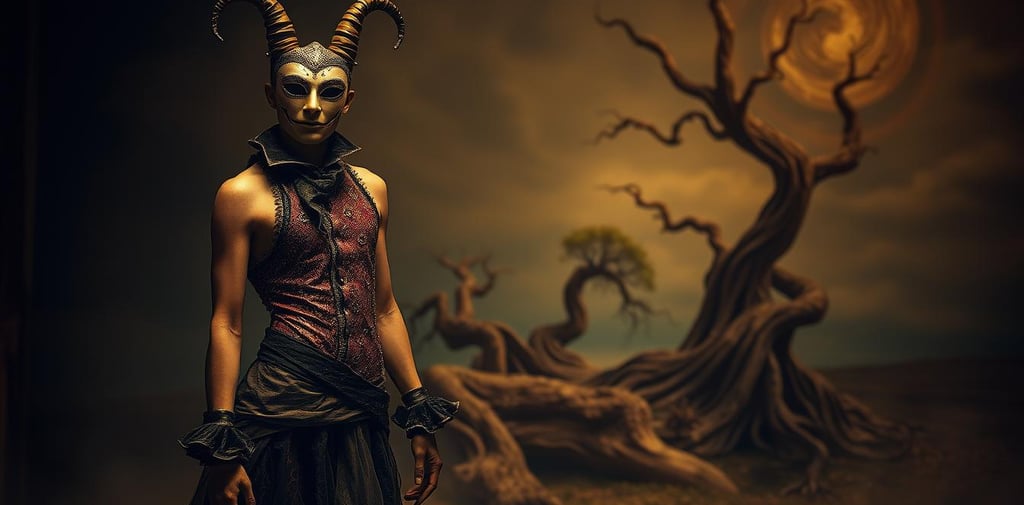
To witness drag is to witness transformation made flesh: sequins scattering light like fallen constellations, laughter sharpened into protest, identity turned inside out and displayed in glorious defiance. What some might call entertainment, I recognize as something older—an ancient archetype stirring beneath the stage lights. The Trickster has always been here, grinning behind the curtain, reveling in collapse and rebirth.
The Trickster is the shapeshifter who mocks kings and seduces gods, who births monsters and miracles alike. In mythology, they appear as Loki, Hermes, Anansi, or Coyote. In our present age, they strut in six-inch heels, their wigs piled as high as Olympus. Drag becomes the Trickster’s modern mask: rebellion lacquered in rhinestones, survival disguised as satire.
The Archetypal Current
Carl Jung called them archetypes, but I think of them as eternal patterns—those recurring figures who slip between worlds, reminding us that chaos is not always destructive. It is fertile. It composts what is rigid and lifeless, so something stranger, wilder, more authentic can emerge.
Every culture has known the Trickster:
Loki, who births Sleipnir in the form of a mare, defying every boundary of gender and role.
Hermes, messenger and thief, sprinting across thresholds mortals cannot cross.
Anansi, weaving wisdom and mischief alike into his web.
Coyote, laughing lessons into the firelight, teaching through contradiction.
These figures remind us that identity is not stone but smoke, shifting shapes depending on where the light falls.
Drag as Sacred Mischief
Drag carries this lineage with sequined precision. It is art turned resistance, ritual disguised as revelry. From clandestine bars to the frontlines of queer liberation, drag performers have embodied the Trickster’s role—mocking authority, twisting gender into satire, dazzling while dismantling the ordinary.
When Bianca Del Rio eviscerates a crowd with wit that cuts deeper than a blade, that’s the Trickster laughing. When RuPaul declares you’re born naked and the rest is drag, it’s Hermes himself winking from behind the mirror, reminding us nothing is fixed—everything is costume.
Drag is not merely about glamour. It is a modern incarnation of myth’s oldest lesson: transformation is both survival and sorcery.
The Shadow Side
Of course, the Trickster is no saint. Chaos liberates, but it also unravels. Loki’s jokes ended with Ragnarök, after all. Too much mischief curdles into cruelty, too much disruption into destruction. The Trickster warns us that rebellion must be tempered with care, lest the stage collapse under its own fire.
The Trickster Within
Even if I never set foot on stage, I can feel the Trickster flicker in myself—in the delight of breaking a small rule, in the itch to question what feels “inevitable,” in the quiet thrill of wearing something that unsettles the room.
The Trickster asks us:
What conventions beg to be mocked?
Which masks do you wear too tightly?
Where does your mischief long to breathe?
These questions aren’t costumes to try on—they’re doorways into authenticity.
The Last Laugh
Drag queens and ancient gods alike deliver the same truth: that identity is never static, that chaos can be crucible, that freedom sometimes arrives in a wig and a wink.
So when a queen struts past with a smirk sharp enough to split heaven, know that you’ve glimpsed something divine: the Trickster alive, alive, alive—reminding us that creation and destruction have always worn the same heels.
© 2025. All rights reserved.