The Glamour of Half-Measures
Anti-hero
FIELD NOTES
Valkyrie
11/10/20252 min read
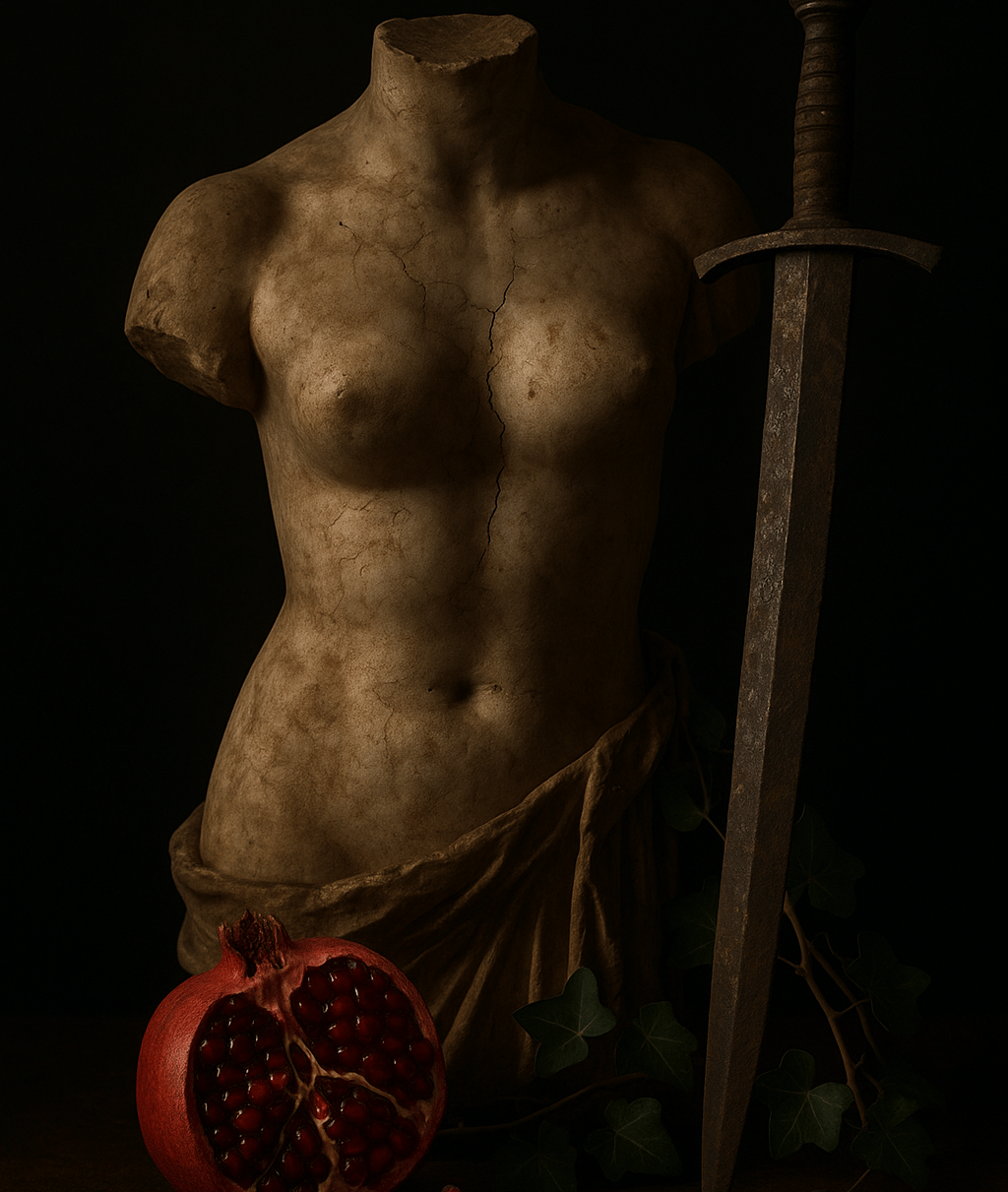
Perfection is sterile—a temple without incense, a statue without a crack. Half-measures, by contrast, belong to the realm of gods who bled, kings who stumbled, and goddesses who ruled from both above and below. They are the velvet ruins of Olympus and the shadowed corridors of the Underworld.
To embrace our inner anti-hero is to choose the in-between. Like Persephone, who is both springtime and shadow; like Loki, who tricks his way into both disaster and salvation; like Achilles, who was adored not despite his heel, but because of it. The glamour lies in never being whole, never being finished.
The Seduction of the Unfinished
The cracked amphora, the scar that outlasts the wound—imperfection draws the eye. It is the flaw that becomes an icon, the half-measure that becomes a testament. Leonard Cohen’s fractured voice is as holy as the Delphic oracle’s riddles; neither could be trusted if they were too clear.
Even myth revels in this: Odin’s spear misses more than it strikes, and yet its existence defines him. Freyja’s necklace is power because it was bartered, compromised for, not pure or freely given. The relics we treasure are always stained.
The Gray Kingdom Between Villain and Hero
Anti-heroes are not anomalies—they are the children of gods. Hamlet drags his feet like Orestes before the Furies. Tony Soprano is just another Odysseus, cunning and broken, limping home in circles. Even modern crime lords echo Hades: kings of shadow, reluctant, flawed, and more human than the radiant champions of Olympus.
We do not dream of pure heroes; they are statues, cold and unreachable. We dream of the gods who erred, the queens who doubted, the heroes who broke—and survived.
Half-Measures as Defiance
The world demands polished heroics, but the trickster, the martyr, the goddess-with-one-foot-in-hell refuse. Rosa Parks staying seated. Bob Dylan rasping through the myth of melody. Anne Lamott’s reminder that “perfectionism is the voice of the oppressor.” These are half-measures that became revolutions.
Even myth obeys this rule. Orpheus, almost leading Eurydice out, fails because of a glance. A half-victory, yet it sings through centuries. That imperfect act is more enduring than any clean triumph.
The Dangerous Seduction
Moral ambiguity is a two-headed hound—Cerberus gnawing both ways. The gray liberates us, but it can also swallow us. Loki’s cleverness births both salvation and monsters. Medea’s defiance becomes both holy and horrifying. Complexity is not permission for cruelty—it is the knife’s edge where meaning lives.
Pyrrhic Victories and Other Hauntings
The anti-hero is crowned not with laurels, but with ashes. Pyrrhic victories are their inheritance, as common as Persephone’s pomegranate seeds—small choices that reshape worlds, victories won at the price of blood. These haunt us precisely because they feel true: unfinished, unresolved, echoing like the last note of a hymn that refuses to resolve.
Half-Measures in Our Own Lives
In our lives, too, half-measures are portals. They free us from the tyranny of “perfect.” To love messily, to post unfiltered, to stumble at work but still build something—it is Orpheus looking back and losing everything, yet leaving us a song.
To live with imperfection is to admit: I am divine because I am unfinished.
The Anti-Hero Within
Carl Jung knew: enlightenment comes from dragging the shadow to light. Rumi knew: the wound is where the light enters. Persephone knew: you can be queen of spring and queen of the dead, and neither cancels the other.
This is the glamour of half-measures. Not completion, not flawlessness, but the power of contradictions left visible. The freedom to stand in the gray and call it holy.
© 2025. All rights reserved.