
The Archivist of Regret
DISPATCHES FROM PURGATORY
Valkyrie
12/1/20253 min read
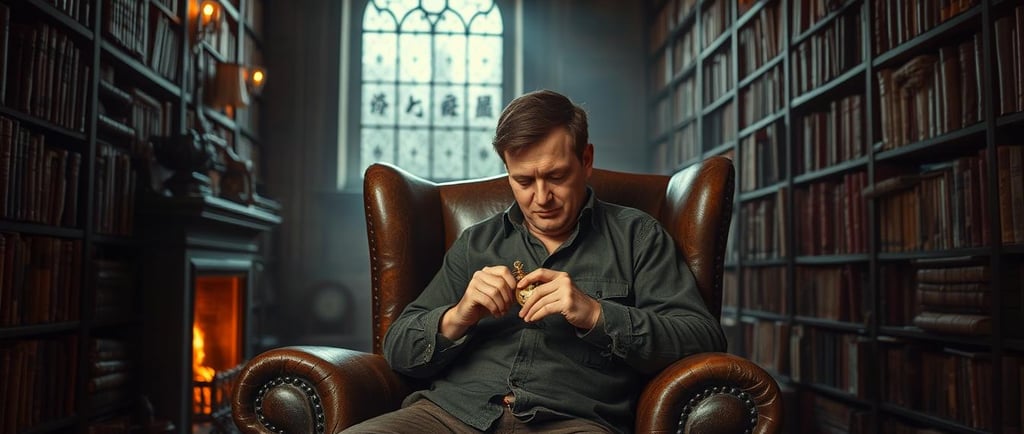
Somewhere in the catacombs of memory, a figure waits — pale hands sorting through boxes labeled What Might Have Been. This is the Archivist of Regret, that tireless keeper of our ghosts. She knows every unfinished sentence, every goodbye that curdled into silence. Her library smells of dust and rain, and her ink is equal parts longing and self-reproach.
To meet her is to meet yourself, stripped of excuses. She does not condemn; she records. Each regret, a page in the chronicle of who you have become. Each omission, a ghostly annotation in the margins of your story.
Regret, after all, isn’t ruin. It’s recordkeeping. It’s the proof you cared enough to wish you’d done better.
The Hidden Patterns Beneath the Skin
We are not single stories, but patchwork — stitched together from myth, mistake, and memory. The Archivist knows this. She traces the threads back through time, unearthing the archetypes that puppeteer our choices: the Innocent who trusted too easily, the Seeker who mistook hunger for destiny, the Caregiver who bled for everyone but herself.
These patterns whisper through our lives, urging us to repeat, repent, or rise. Archetypes are the blueprints of human experience, engraved deep in the collective marrow. They appear in dreams, déjà vu, and in the uncanny repetition of our own bad habits.
Understanding them isn’t indulgence; it’s cartography. The self is a labyrinth. The archetypes are the torchlight.
The Archivist Herself
She is an internal historian — half-muse, half-warden. Her role is to curate the “if onlys” with obsessive precision. But obsession can become devotion if you handle it gently. To study your regrets without letting them devour you is an act of alchemy.
For some, the Archivist is a tormentor: a looped reel of mistakes. For others, she becomes an unlikely mentor — a quiet teacher who reminds you that pain, when archived properly, becomes wisdom. The transformation begins when you stop fearing her records and start reading them.
Preserving the Past Without Living There
Regret is a strange relic. It makes us feel tethered to who we were — a sentimental kind of imprisonment. Yet the act of preservation is also protection: a defense against the void of forgetting. The danger lies not in remembering, but in worshipping the past like it still owns you.
To catalog your regrets with honesty is to make peace with the ruins. To polish them until they gleam with meaning. To see that the things you couldn’t fix were still worth loving once.
The Archivist’s Influence
She shapes your choices more than you realize. Nostalgia masquerades as instinct, regret as caution. You repeat old patterns not because you enjoy the pain, but because familiarity is its own narcotic. The Archivist whispers, “This time, maybe it’ll end differently.”
But once you name her, the spell loosens. You begin to act, not react. You choose out of curiosity instead of fear. That’s the first quiet rebellion against her meticulous recordkeeping.
The Constellation of Selves
The Archivist does not stand alone. She orbits alongside other inner figures — the Rebel, the Healer, the Shadow. Together, they form a celestial court inside you. They argue, collaborate, and sometimes conspire. Understanding one illuminates the rest.
The Innocent resists her. The Creator redeems her. The Shadow envies her precision. They all coexist, shaping your evolution. It’s messy. But wholeness always is.
From Curator to Keeper of Wisdom
Transformation doesn’t mean burning the archive. It means learning to read between the lines. Journaling, ritual, art — these are not hobbies but negotiations with memory. Write letters to your past selves. Draw maps of your regrets and mark the places where you turned back instead of through.
In doing so, you shift her role. The Archivist stops tallying your sins and begins tending your growth. She becomes a librarian of wisdom — the kind who smiles as she hands you your own story back, cleaned and catalogued, ready for re-entry into the living world.
Integration
To integrate the Archivist is to accept that nostalgia and regret are sacred materials — the compost from which future selves grow. You don’t destroy them; you digest them.
We are all archives in motion. To be human is to preserve and to transform, again and again. Somewhere in the endless vaults of your inner library, the Archivist sets down her pen. The ink dries. And at last, you are free to begin another volume.
© 2025. All rights reserved.