Season of Wolves, Season of Wives
DISPATCHES FROM PURGATORY
Valkyrie
12/19/20253 min read
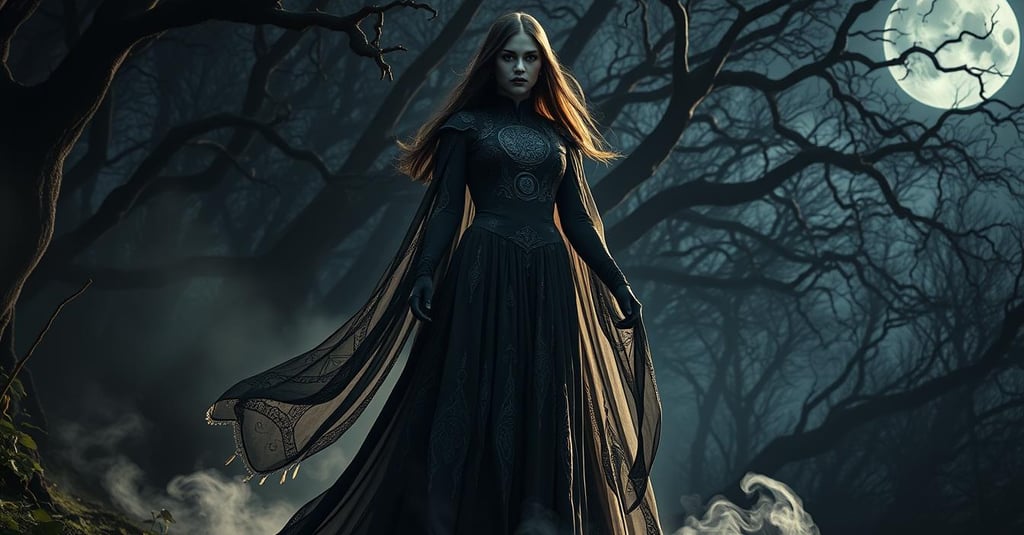
There comes a point in every woman’s becoming when she stands at the threshold, half-shadow, half-light, and wonders which version of herself the world will tolerate today. The wolf? The wife? Both are holy, both are hungry. One bares her teeth at the moon; the other sets the table and remembers everyone’s favorite cup. They are not opposites. They are sisters, howling across the same bone-white field of expectation.
The Dual Nature: Wolves and Wives
Every woman I know lives between these archetypes—the wild and the wedded, the free and the bound. Society loves a binary; mythology does not. The wolf is not lawless, she is loyal to her own nature. The wife is not submissive, she is a strategist of care. Together, they form a rhythm of protection and creation, destruction and devotion.
To be modern and feminine is to constantly shift between these shapes, to gnaw at the edges of what’s expected until it fits your teeth. Power, after all, is rarely polite.
The Wild Woman
The wolf archetype is not a costume you wear; it’s the part of you that refuses to die in captivity. It prowls in the space between intuition and instinct. Myth made her monstrous because she could not be domesticated. Yet it’s that same feral awareness that guides us home when reason fails.
To awaken her is not to abandon softness, but to remember that tenderness can snarl when cornered. To be untamed is not to reject love—it’s to refuse the kind that asks you to shrink.
The Wife Rewritten
The wife archetype, long misused as a synonym for submission, is far more cunning than she appears. She’s the keeper of oaths, the architect of the hearth, the quiet revolutionary who builds empires disguised as households.
The modern wife archetype doesn’t kneel; she negotiates. She knows domesticity can be a site of both devotion and rebellion. To embody her is to claim sovereignty over care itself—to decide what, and who, is worthy of your labor.
The Dark Feminine
In the mirror’s dim reflection waits the shadow self: the parts you were told to bury. Rage. Desire. The need to rest. The craving for solitude. The ache for worship.
The dark feminine isn’t evil; she’s exiled. She’s the keeper of the truths that polite society has banished to the woods. To embrace her is to reclaim your wholeness. Integration is a blood rite—it demands honesty, not apology.
Beyond the Binary
We are not archetypes in isolation but constellations. Some days we are wolf and wife. Other days, mother, lover, sage, trickster, crone. These selves do not cancel each other; they collaborate.
Feminine identity has never been a single story—it’s a chorus, sometimes discordant, always divine.
Cultural Warfare
Still, the world prefers its women categorized: saints or sinners, brides or beasts. That is cultural control disguised as morality. Every era invents a new leash and calls it tradition.
Refusing to choose—refusing to simplify—is its own quiet revolution. You are not too much; you are multiple. That is your danger. That is your power.
Becoming the Architect of Your Seasons
To live as both wolf and wife is to write your own mythic weather. You get to decide when it’s the season for loyalty, and when it’s time to bite. You can build a home with your hands and still leave claw marks on the door.
Empowerment isn’t the absence of contradiction—it’s the mastery of it. The sacred feminine was never meant to be tamed. She was meant to rule the thresholds, to choose which version of herself crosses over each dawn.
And so, we walk forward—part huntress, part homemaker, wholly divine. Wolves and wives, daughters of our own making, architects of every season we survive.
© 2025. All rights reserved.