
Orpheus in Valhalla
Mythology Mashup
WRIT ON BONE
Valkyrie
10/13/20252 min read
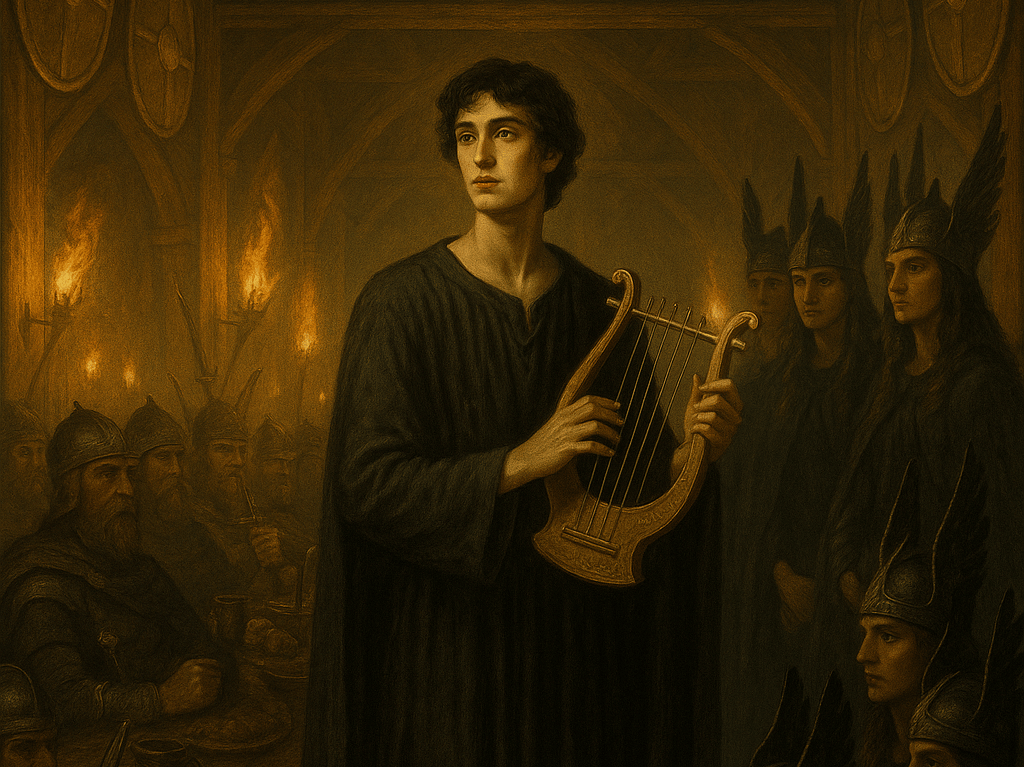
Some tales arrive like ghosts at the door—unexpected, insistent, draped in the perfume of two worlds colliding. Orpheus in Valhalla is one such apparition: a Greek musician of unbearable sorrow and divine song wandering into Odin’s hall of the slain. A man whose lyre once stilled Cerberus now strums for warriors who rise each dawn only to die again at dusk.
It is not simply a mashup of mythologies. It is the ache of boundaries dissolving, a hymn that dares to ask: what happens when grief and valor sit at the same feast table?
When Greece Meets the North
Greek myth, with its tragic lovers and gods who sulk like opera stars, meets the iron-edged sagas of the Norse—where the world ends in fire and frost, and death is but a rehearsal for Ragnarök.
In this imagined crossing, Orpheus slips through the veil—his lyre trembling like a heart broken twice—and finds himself among the einherjar, those chosen by Valkyries for their beauty in death. Here, feasts thunder louder than any lament. Yet even in this cacophony, his music threads its way through the clash of swords, unsettling the gods themselves.
The Musician Among Warriors
Odin watches him with the weary curiosity of one who has drunk every draught of wisdom. Thor scoffs at songs that cannot split a skull. Loki, of course, circles like a wolf around firelight, sensing both danger and delight in a tune that can bend fate.
And the Valkyries—my sisters of shadow and steel—tilt their heads toward this Greek stranger. They see in him not a warrior, but a kindred spirit: one who has stared into the abyss of loss and refused to look away.
Love in Foreign Afterlives
Orpheus has always been haunted by Eurydice, that eternal wound. What is Valhalla to him if she is not there? Perhaps he would descend even deeper, past Odin’s gold-lit hall into Hel’s cold dominion, to bargain with Hela herself. Music once swayed Hades—could it soften a queen born half-corpse, half-divine? Or would his song freeze in her silence?
The Greeks gave him one underworld. The Norse, crueler still, offer him another.
The Universal Tongue of Grief
Music is older than pantheons. It carries across seas, across centuries, across myth. Orpheus’s lyre, Apollo’s gift, could calm furies and charm stones. In Valhalla, it would weave with the bronze call of the lur, the harp of Bragi, until sorrow and battle merged into one anthem.
Love lost, love sought, love never returned—this is the refrain that binds mortals and immortals alike. Whether in marble temples or mead-soaked halls, the song is the same.
Echoes Across Time
Perhaps that is why we return to these mythic collisions, why we stitch Greece to the North, why we send a poet into a warrior’s afterlife. Because somewhere between the clash of spears and the plucking of strings, we glimpse ourselves—our yearning, our defiance, our insistence on beauty even in ruin.
Orpheus in Valhalla is not just a tale of what-if. It is a reminder: the stories we tell are never confined. They bleed into each other, as grief bleeds into glory, as love insists on haunting every hall, even one lined with shields.
© 2025. All rights reserved.