
On Falling in Love with Flawed Gods
Anti-hero
FIELD NOTES
Valkyrie
11/7/20253 min read
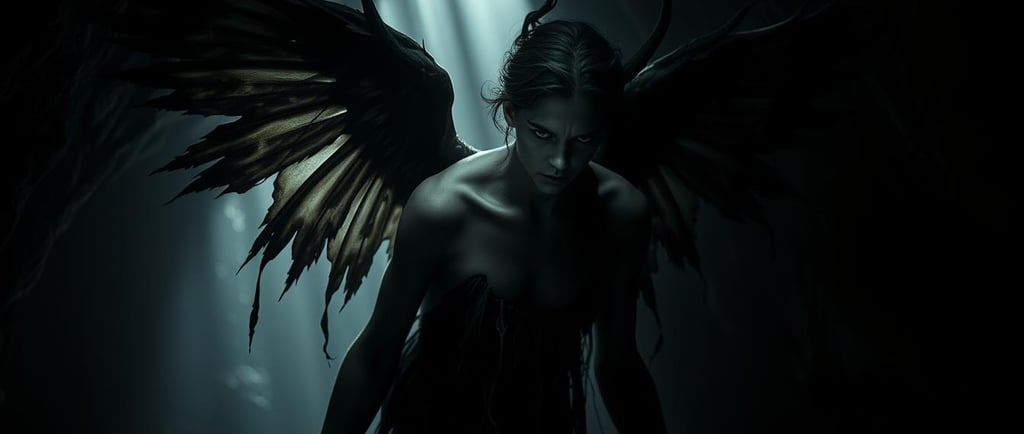
Perfection is a cold marble statue—dazzling from a distance, but lifeless to the touch. It is the cracks, the weathering, the hairline fractures through which moss creeps, that call us closer. So too with gods and heroes. The flawed ones beckon us: those who stumble, bleed, betray, rage, and yet continue their divine theater. We do not love them despite their ruin—we love them because of it.
The anti-hero, that darling of our modern imagination, is only a rephrasing of something older: the god who falters, the goddess who errs, the mortal who ascends not through purity but through defiance. They remind us that perfection is sterile, while imperfection pulses with life. To fall in love with them is to fall, slyly, into our own reflection.
Broken Pedestals, Sacred Clay
Every idol is sculpted from flawed foundations. We place them on pedestals only to watch them shatter under their own weight, and yet—their ruins make the most beautiful altars. In myth, gods cheat, brood, betray oaths, and leave wreckage behind them. We are enthralled because it feels familiar.
When the pedestal cracks, we don’t turn away. We lean in. We recognize something of our own bruised ribs and hidden scars in their fissures. And in that moment of recognition, the divine becomes human, and the human becomes divine.
When Divinity Trips Over Its Own Feet
The Greeks knew this truth intimately: Zeus was a philanderer, Hera a jealous conspirator, Apollo a sulker with blood on his hands. These were not beings of spotless virtue, but archetypes of our own appetites. They stumbled through eternity like actors in a tragedy written by mortals who longed for gods they could understand.
Divine failure comforts us. If even the immortals fall prey to desire, rage, or despair, then perhaps our own falterings are not evidence of weakness, but participation in the oldest ritual of all: to be alive is to be unfinished.
The Seduction of the Anti-Hero
What captivates us is not the saint who floats above temptation, but the figure who treads the gray between virtue and ruin. We cheer for villains who reveal their wounds, for monsters who bleed like we do. When Walter White justifies his empire, or when Villanelle kills with wicked delight, we do not turn away—we lean closer.
There is danger in this dance. To adore the anti-hero is to flirt with shadows, to risk confusing admiration with emulation. Yet even here, the allure persists: their defiance whispers to us of freedoms we dare not take, their moral ambiguity mirrors the mess we live in daily. We do not crave their crimes, but the liberation they embody.
The Mirror of Broken Glass
Every cracked mirror reflects us twice—once in distortion, once in truth. That is the secret of flawed characters: in their failures, we find our scars echoed back. Their grief validates our own. Their rage permits ours. Their survival, even bloodstained, reminds us that healing does not require purity.
This is why we love Heathcliff’s bitterness, Holden’s alienation, Lisbeth Salander’s vengeance, Amy Dunne’s exquisite cruelty. Their wounds are written in a language our bones already know.
Building Altars to Beautiful Failures
What do we do with all these broken idols? We build a pantheon out of them. A shrine of gods and characters whose flaws gleam like jewels in the dark. We light candles at the feet of our villains and anti-heroes, not because they are perfect, but because they are honest in their imperfection.
In this strange liturgy, forgiveness runs both ways. When we forgive gods for being fallible, we forgive ourselves for being human. When we embrace their fractures as sacred, we begin to see our own not as shame, but as testament.
The Sacred Art of Falling for Broken Things
Loving a flawed god is, ultimately, a devotional act of self-love. It is the recognition that cracks are not weakness, but entry points for intimacy. That imperfection is not an error in the design, but the very place where divinity leaks through.
We do not need marble statues. We need gods with dirty fingernails, with tempers, with haunted eyes. Gods who remind us that we are not alone in our stumbling. Gods who prove that broken things are not only survivable, but sacred.
And so I gather my pantheon of beautiful failures close, whispering the prayer they’ve taught me:
We are loved not despite our fractures, but because of them.
© 2025. All rights reserved.