Necromancy of Memory
.
FIELD NOTES
Valkyrie
9/22/20253 min read
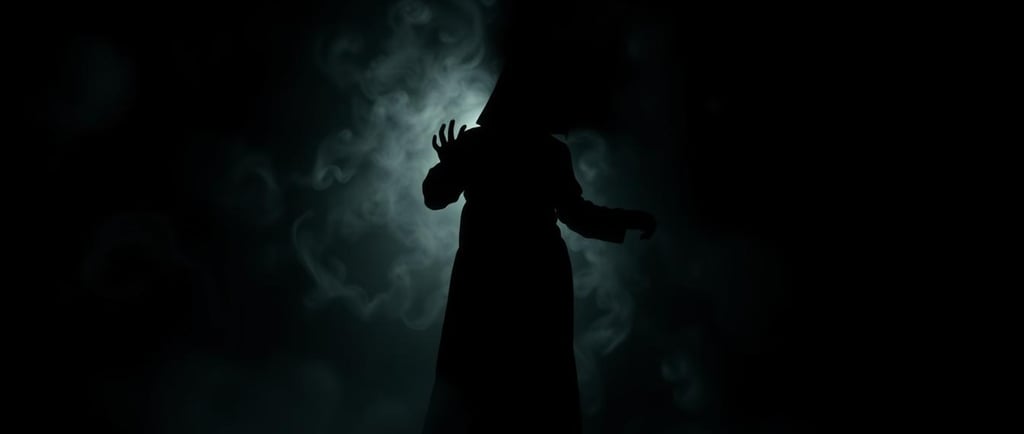
There is a dark art to remembering. Call it necromancy, if you will—the conjuring of ghosts from the cavernous halls of the mind. Memory is no mere filing cabinet; it is a séance. The past slips through the veil and whispers, not always kindly, not always true, but always with the intimacy of a lover’s breath at your ear.
I’ve come to see memory less as recollection and more as resurrection. The dead walk in us every time we recall them. Shadows of our former selves haunt our steps, shaping the choices we make in the half-light of the present.
The Ghosts That Haunt Us
We are each our own haunted house. Memories linger in the corners, watching, silent until triggered. A song, a scent, a place can become a doorway, and suddenly we are not here at all—we are then, reliving what should have been buried.
These revenants are powerful. They shape how we love, how we fear, how we flee. They whisper in our decisions, coloring everything with the residue of what once was. Shadow work is simply necromancy under a different name: to face these phantoms, to name them, to stop letting them rattle their chains unseen.
Summoning What Was Forgotten
Not all ghosts come willingly. Some memories slumber deep in the marrow, waiting for ritual to rouse them. I find that photographs, old journals, and the act of returning to places I once fled are less nostalgia and more incantations. They summon fragments I thought I had lost—fragments that return with the violence of thunder or the gentleness of a sigh.
The senses are particularly treacherous: the taste of a childhood fruit, the smell of rain-soaked lilacs, the scrape of a familiar melody on an old piano. These are portals. One step too close and the floodgates open.
The Dark Art of Remembering
Why do we resurrect pain? Why call up the dead who clawed at us? Perhaps because transformation demands it. Jung was right—light alone does not enlighten. One must sit with the darkness until it speaks.
But there is always a price. To remember is to bleed. The wound splits open and for a moment you are both past and present, bleeding twice for the same cut. And yet—without reopening it, how could the light ever enter?
Memory as Time Travel
Memory is a trickster god, neither loyal nor exact. It time-travels with abandon, pulling us across boundaries we thought impermeable. A scent can collapse decades into seconds. A voice message from an old lover can make your pulse race like it did years ago.
The danger, of course, is obsession—when remembering becomes shackles instead of wings. We are meant to consult the dead, not live among them.
The Unreliable Necromancer
And here lies the cruelest truth: our memories betray us. They distort, embellish, invent. The mind is a faulty grimoire, rewriting as it pleases. Sometimes the memory you summon is no memory at all, but a fabrication—convincing, seductive, utterly false.
Does it matter? Even the illusions shape us. Even a false ghost can hold us hostage.
The Collective Underworld
Memory is not ours alone. We inherit it—family trauma passed like heirlooms, cultural myths etched into our bones. Collective memory is a vast underworld, populated by voices not our own but carried nonetheless.
It binds us into community, but also ensnares us in histories we never lived but feel in our very blood. To walk through this underworld is to discover that we are never entirely ourselves; we are a chorus of the remembered.
Digital Necromancy
And now—our ghosts are online. The underworld has servers. Technology has embalmed our lives in photographs, messages, timelines that never decay. Unlike human memory, the digital specter does not fade.
Social media is less a scrapbook than an altar. We curate the ruins of ourselves for others to gaze upon, praying for likes as if they were offerings. But this altar lies. It polishes the bones, hides the rot. It preserves, yes—but distorts.
This is the new necromancy: not summoning what we forgot, but being haunted by what the internet refuses to let us forget.
The Wisdom of Resurrection
To work with memory is to practice necromancy: dangerous, imperfect, but necessary. In resurrecting the past we find the map of who we are. In facing our ghosts we learn which ones deserve to be integrated, and which must be finally laid to rest.
The wisdom of memory is not that it is accurate—it isn’t. The wisdom is that even in its distortion, it reveals. Every haunting has something to teach us. Every ghost we dare face becomes, eventually, an ancestor of our becoming.
© 2025. All rights reserved.