Hera and Hel: A Brunch Conversation
Mythology Mashup
WRIT ON BONE
Valkyrie
10/17/20253 min read
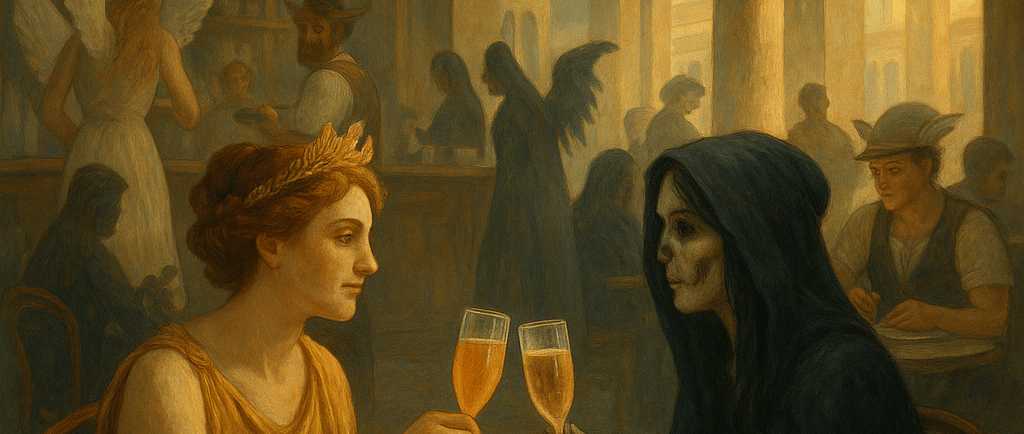
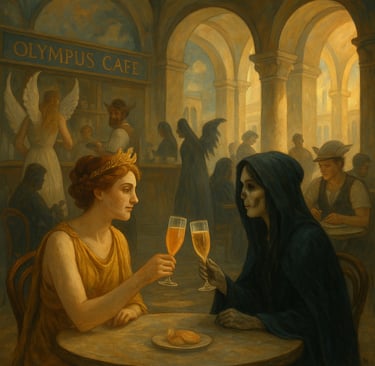
Imagine it: a corner table at Olympus Café, where the marble pillars lean just so, catching the late morning sun, and the mimosas are poured by naiads who would rather be singing in the fountains. There sits Hera, every inch the jeweled queen of Olympus, and across from her—Hel, half-shadow, half-maiden, sipping her drink with the steady calm of someone who has already seen the end of all things.
It was less a brunch and more a collision. The Queen of Marriage and the Mistress of the Dead breaking bread together, trading stories between buttered croissants and the faint clink of divine cutlery.
Introductions Over Appetizers
Hera began as she always does—with lineage and authority. Zeus’s consort, yes, but also a force in her own right: patron of family, enforcer of vows, a goddess who has made an art of vengeance. Her tone carried the weight of Olympus itself, like thunder in a silken gown.
Hel answered softly, but not meekly. Daughter of Loki, yes, but also the solitary sovereign of Helheim. Where Hera’s power blazed, Hel’s pooled dark and cold, a kingdom built not on love or fury but on inevitability. She ruled not with passion but with permanence.
The Weight of Crowns
Both wore crowns invisible to mortals but heavy nonetheless. Hera spoke of Olympian politics—a labyrinth of egos, infidelities, and thunderbolts she must constantly steer. Hel described the quiet discipline of death’s domain, where order must be kept among shades and warriors alike. Their burdens were different, but the ache behind their words was the same.
Family Drama: Comparing Divine Households
Naturally, family gossip arrived like the next course. Hera, ever the betrayed wife, detailed Zeus’s endless infidelities, her voice edged like a diamond blade. She confessed to the exhaustion of punishing his mortal lovers—an eternal game of whack-a-mistress that left even goddesses weary.
Hel, meanwhile, smiled faintly as she spoke of her siblings: Fenrir, the wolf destined to devour Odin, and Jörmungandr, the serpent coiled around the world. Her family reunions were Ragnarok rehearsals, chaos with no end. And yet, in the shadow of that chaos, Hel found her strength.
The Matter of Mortals
They laughed—yes, goddesses do laugh—over how their kind meddles with mortals. To Hera, humans were pawns, collateral in her ceaseless feud with Zeus. To Hel, they were tenants, passing through her gates with stories etched into their bones. Where Olympus played with mortals like chess pieces, the Norse gods fought alongside them, bled with them, relied on their valor.
Fate, as the Final Guest
Inevitably, fate joined us at the table, uninvited but impossible to ignore. The Fates and the Norns—threads and runes, scissors and roots—reminding them both that crowns cannot cut destiny’s cloth. Hera admitted even Zeus feared prophecy. Hel shrugged, having long since accepted Ragnarök as both doom and renewal. They agreed: even gods sit helpless in the loom of fate.
Coffee and Afterlives
By the time coffee was poured, the talk had grown darker. Hera described Elysium, Tartarus, and the Asphodel Meadows, realms of reward, punishment, and forgetfulness. Hel countered with Valhalla’s battle-feast, Folkvangr’s field of fallen, and her own Helheim, cold but not cruel, where the ordinary dead found rest.
Between sips, they compared the architecture of eternity, two different cultures imagining what comes after breath. Different maps, same longing.
The Check Arrives
When the bill came—on a tablet etched in gold and bone—they left more than coin on the table. They left understanding. Hera, radiant and wrathful, acknowledged the strange kinship she felt with Hel. Hel, quiet as snowfall, offered no promises, only a nod that felt eternal.
And me? I left Olympus Café with the echo of their words trailing me like perfume and frost. It seems even queens of vastly different realms find common ground over pastries and prosecco. Perhaps that is the secret truth of mythology: every pantheon, every tale, is just another brunch table waiting to be set.
© 2025. All rights reserved.